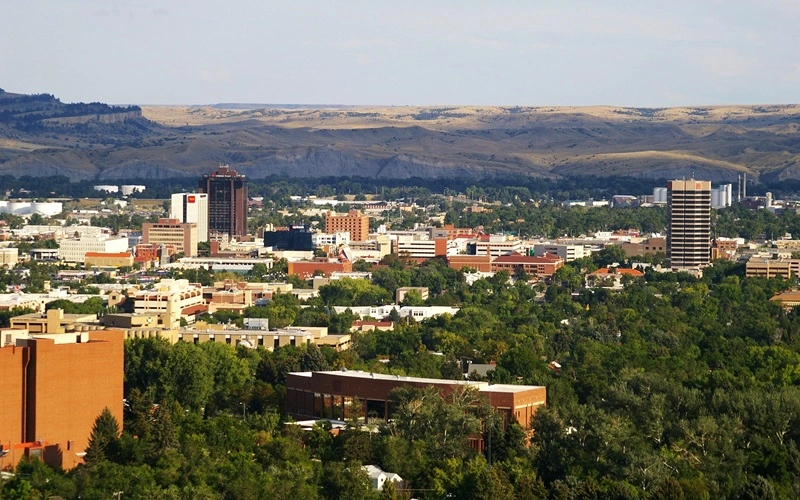
Billings, Montana: History, Population, Attractions, Economy, and Quality of Life
Billings is the largest city in Montana and one of the most important commercial, medical, educational, and transportation centers in the northern Rocky Mountain region of the United States. Located in south-central Montana along the Yellowstone River, the city combines the character of the American West with the services and opportunities of a growing regional urban center.
Known as the Magic City, Billings developed rapidly during the railroad expansion of the late nineteenth century. Today, it serves as a commercial hub for a wide geographic area that includes eastern Montana, northern Wyoming, and parts of the neighboring Great Plains. Its economy encompasses healthcare, retail, energy, agriculture, education, construction, transportation, and tourism.
The city is also known for its dramatic sandstone cliffs, historic neighborhoods, museums, performing arts venues, craft breweries, and access to outdoor recreation. From the Rimrocks overlooking the urban landscape to the Yellowstone River valley and nearby mountain ranges, Billings offers a distinctive combination of urban convenience and outdoor adventure.
Whether someone is researching the city’s history, planning a visit, considering relocation, or learning about Montana’s largest urban community, Billings provides an interesting example of how geography, transportation, natural resources, and regional commerce can shape a modern American city.
Where Is Billings, Montana?
Billings is located in the south-central part of Montana, in Yellowstone County. It is the county seat and the principal city of the Billings metropolitan area.
Montana is one of the largest states in the United States by land area, but much of its population is distributed across relatively small cities, towns, and rural communities. Billings stands out because of its size and its role as a service center for a large surrounding region.
The city lies in the Yellowstone River valley, with the river flowing through the broader area. Its landscape includes open plains, agricultural land, river corridors, and prominent sandstone formations known as the Rimrocks.
Billings is also positioned along major transportation routes, including Interstate 90. These connections support freight movement, regional travel, and commercial activity between Montana and other parts of the American West.
Geographic location and regional importance
Billings occupies a strategic position between the Rocky Mountains and the Great Plains. It is far enough east of the highest mountain ranges to have a landscape that transitions toward open grasslands and agricultural areas, yet it remains within reach of mountain scenery and outdoor destinations.
The city functions as a regional destination for shopping, medical treatment, professional services, education, and business. Residents of smaller communities often travel to Billings for specialized services that may not be available locally.
Its commercial influence extends beyond the municipal boundaries. The city serves people across a broad portion of Montana and neighboring states, making its economy larger in regional importance than its population alone might suggest.
Elevation and landscape
Billings sits at an elevation of approximately 950 meters above sea level, although the exact elevation varies by neighborhood and measurement point.
The most recognizable landscape feature is the Rimrocks, a series of sandstone cliffs and elevated formations that rise above portions of the city. They create a distinctive skyline and offer panoramic views of the surrounding plains, neighborhoods, and distant mountains.
The Yellowstone River adds another important geographic feature. Its valley supports natural habitats, agricultural activity, recreation, and transportation corridors.
Population of Billings
Billings is Montana’s largest city by population. According to the 2020 United States Census, the city had 117,116 residents. The U.S. Census Bureau subsequently estimated its population at 121,483 on July 1, 2024.
These figures should be distinguished from the population of Yellowstone County and the broader metropolitan area, which include communities outside the city limits. Population totals can differ depending on the geographic boundaries and the year of the estimate.
Billings has grown over several decades as people have moved to the city for employment, education, healthcare, housing options, and access to services. Its role as a regional hub also attracts people from rural Montana and northern Wyoming.
Population growth and urban expansion
The city’s population increased substantially between the 2010 and 2020 censuses. The 2010 census recorded 104,170 residents, while the 2020 census counted 117,116.
Growth has supported the expansion of residential neighborhoods, shopping areas, healthcare facilities, educational institutions, and road infrastructure. New development has also increased demand for public services, utilities, housing, and transportation planning.
As Billings grows, city planners must balance the needs of residents and businesses with infrastructure costs, environmental considerations, and the preservation of the region’s distinctive landscape.
Demographic diversity
Billings has a population with a variety of cultural, professional, and socioeconomic backgrounds. The city includes families who have lived in Montana for generations, people who have moved from other states, students, healthcare workers, business owners, and employees in industrial and service occupations.
The region also has important Indigenous histories and connections to Native American communities. Understanding the history of the Northern Plains requires recognizing that the land was inhabited and used by Indigenous peoples long before the establishment of the modern city.
The city’s demographic profile influences its schools, cultural organizations, public services, recreational programs, and local economy.
History of Billings
The history of Billings is closely linked to railroad expansion, settlement in the American West, agriculture, and the development of transportation and commercial networks.
Before the city was established
Long before Billings became a railroad town, the Yellowstone River region was home to Indigenous peoples who lived, traveled, hunted, traded, and maintained cultural relationships with the landscape.
The Northern Plains have a long history of human settlement and movement. The river valleys, grasslands, and surrounding uplands provided resources for communities whose economies and traditions were adapted to the environment.
Any account of Billings’ development should therefore distinguish the area’s much older Indigenous history from the relatively recent establishment of the modern municipality.
The founding of Billings
The modern city emerged during the late nineteenth century, when railroad expansion transformed the settlement patterns of the American West.
Billings was established as a railroad town in 1882 and was named after Frederick H. Billings, a former president of the Northern Pacific Railroad. The city’s rapid early growth earned it the nickname Magic City, reflecting the speed with which buildings, businesses, and infrastructure appeared.
Railroads connected the region to distant markets and made it easier to transport agricultural products, livestock, manufactured goods, and people. Billings’ location along these transportation routes helped it become an important center for trade and distribution.
The city was incorporated on March 24, 1882, according to the city’s historical account.
Why Billings became known as the Magic City
The nickname Magic City refers to the rapid development that followed the establishment of the railroad town. In a short period, a settlement grew into a functioning urban center with commercial streets, residential areas, transportation facilities, and public institutions.
The railroad attracted merchants, workers, investors, and settlers. As the population expanded, demand grew for shops, hotels, banks, warehouses, services, and housing.
This early period established a pattern that continues to influence Billings: its economy depends not only on activity within the city but also on its ability to connect surrounding communities with markets and services.
Agriculture and regional trade
Agriculture has played an important role in the wider Yellowstone Valley and surrounding plains. Farms and ranches across the region produce crops and livestock, creating demand for transportation, equipment, supplies, processing, storage, and distribution.
Billings developed as a market center for many of these activities. Businesses in the city help connect producers with consumers, suppliers, and commercial networks.
Agricultural trade has remained an important part of the regional economy even as healthcare, retail, energy, education, and other sectors have expanded.
Industrial development and the modern city
During the twentieth century, Billings grew beyond its railroad origins. Industrial facilities, energy-related businesses, healthcare providers, schools, and commercial districts strengthened its position as a regional center.
Improved highways and aviation connections helped businesses reach customers and partners across a wider geographic area. Residential development also expanded as the population increased.
Today, the city’s identity reflects several overlapping stages of development: Indigenous history, the settlement of the American West, railroad expansion, agricultural commerce, industrial activity, and modern service industries.
The Rimrocks: Billings’ Most Recognizable Landscape
The Rimrocks are among the most distinctive natural features of Billings. These elevated sandstone formations rise above parts of the city and create dramatic cliffs, ridgelines, and viewpoints.
The formations are important to the city’s visual identity and provide a direct connection between urban life and the surrounding geology.
Geological significance
The Rimrocks developed through geological processes that shaped the sedimentary formations of the region. Their exposed rock surfaces reveal part of the landscape’s long history, while erosion has created the cliffs and ledges visible today.
The formations are not merely decorative scenery. They influence where roads and neighborhoods are built, how the city is viewed from different directions, and where people go for outdoor recreation.
Scenic views and recreation
Visitors and residents can find viewpoints along portions of the Rimrocks and enjoy broad views of Billings and the surrounding countryside.
Depending on the location, activities may include walking, hiking, photography, and sightseeing. Trail access, parking, weather, and safety conditions should be checked before setting out.
The cliffs can be dangerous near exposed edges, particularly during strong winds, icy conditions, or low visibility. Visitors should remain on suitable routes and respect any posted restrictions.
The Rimrocks and urban identity
Few landscape features are as closely associated with Billings as the Rimrocks. They distinguish the city from many other communities in the northern Great Plains and provide a recognizable backdrop for photographs, local tourism materials, and outdoor activities.
Their presence also illustrates how natural geography can become part of a city’s identity and influence its recreational opportunities.
The Yellowstone River and the Surrounding Environment
The Yellowstone River is a major geographical feature of south-central Montana. Its valley has influenced settlement, agriculture, transportation, and recreation for generations.
The river is part of a larger watershed that drains portions of the northern Rocky Mountains and the Great Plains. Its flow connects mountain environments with lower-elevation landscapes and supports a range of aquatic and riparian habitats.
Recreation along the river
Depending on the access point and current conditions, the river corridor offers opportunities for fishing, wildlife observation, photography, and other outdoor activities.
Water levels and currents can change significantly with the seasons. Visitors should check local guidance before boating, wading, or fishing and should not assume that a riverbank or access point is safe simply because it is close to the city.
Environmental importance
River corridors support vegetation, wildlife, and ecological processes that differ from the drier surrounding plains. Protecting water quality, managing development, and maintaining suitable habitat are important regional concerns.
The river also has practical significance for agriculture and communities throughout its watershed. Water management must account for environmental conditions, competing uses, seasonal variation, and the needs of local residents.
Economy of Billings, Montana
Billings has one of the most diversified urban economies in Montana. It is a major center for healthcare, retail, energy, agriculture-related services, transportation, construction, education, and professional services.
The city’s economic influence extends beyond its boundaries because businesses and institutions serve a large regional population.
Healthcare and medical services
Healthcare is one of Billings’ most important economic sectors. The city serves as a medical destination for patients from eastern Montana, northern Wyoming, and other surrounding areas.
Billings Clinic and Intermountain Health St. Vincent Regional Hospital are prominent healthcare institutions in the city. Their services support patients, employ healthcare professionals, and contribute to the local economy.
Specialized medical facilities can reduce the need for some residents to travel to distant metropolitan areas for treatment. The presence of healthcare institutions also creates demand for laboratories, pharmacies, medical equipment, accommodation, food services, and other supporting businesses.
Healthcare’s regional role makes Billings important to communities that have fewer local medical resources.
Retail and commercial services
Retail is another major part of the city’s economy. Billings attracts shoppers from surrounding towns and rural areas because it offers a broad range of stores, restaurants, professional services, and commercial facilities.
Shopping districts serve different needs, from everyday groceries and household goods to specialized products and regional retail destinations.
The city’s trade area extends into parts of neighboring states, making retail activity an important source of employment and business revenue.
Energy and refining
Montana has a significant energy sector, and Billings is associated with oil refining and related industries. Energy businesses support jobs in operations, logistics, engineering, maintenance, distribution, and specialized services.
The industry also creates connections with transportation networks and the wider regional economy.
Energy-related development can bring economic benefits, but it also involves challenges such as changing commodity prices, environmental regulation, industrial safety, and the transition toward different energy technologies.
Agriculture and food supply chains
Agriculture remains important to the region surrounding Billings. Grain production, livestock operations, ranching, and other agricultural activities generate demand for equipment suppliers, transportation companies, storage facilities, processors, and financial services.
The city serves as a commercial center for businesses that support rural producers. This relationship connects urban employment with agricultural production across the region.
Food distribution, agricultural services, and the movement of products to other markets are therefore important parts of Billings’ broader economic role.
Transportation and logistics
Billings’ position along Interstate 90 and its regional aviation connections make transportation and distribution important economic activities.
Trucking companies, warehouses, suppliers, and commercial distributors benefit from the city’s connections with other communities in Montana and neighboring states.
The ability to move goods efficiently supports retail, construction, agriculture, manufacturing, and energy-related operations.
Construction and real estate
Population growth and commercial activity support demand for new housing, offices, healthcare facilities, retail developments, and public infrastructure.
Construction creates employment for contractors, tradespeople, engineers, architects, suppliers, and other professionals. The real estate sector also supports property management, maintenance, financing, and related services.
However, growth can increase pressure on housing availability, land prices, roads, utilities, and public services. Sustainable development requires planning that considers both immediate demand and long-term infrastructure needs.
Small businesses and entrepreneurship
Billings supports independent retailers, restaurants, repair shops, professional practices, creative businesses, and other small enterprises.
Local businesses contribute to neighborhood identity and provide services that larger companies may not offer. They also create opportunities for entrepreneurship and employment.
The city’s regional role can give businesses access to customers beyond the immediate population, although operating costs, competition, staffing, and economic fluctuations remain important challenges.
Education in Billings
Education is an important part of Billings’ civic and economic life. The city has public and private schools, vocational opportunities, higher education institutions, and educational services that support residents of different ages.
Montana State University Billings
Montana State University Billings is a public university offering undergraduate and graduate programs in multiple fields. Its academic areas contribute to workforce development and provide opportunities for students seeking higher education without leaving the region.
The university also supports research, community partnerships, cultural activities, and professional development.
Students can pursue fields related to business, education, health, science, technology, and other disciplines, depending on the programs available.
Rocky Mountain College
Rocky Mountain College is a private institution in Billings. It offers academic programs and a campus environment that contributes to the city’s educational diversity.
The presence of more than one higher education institution gives students a choice of educational settings and programs. Colleges and universities also support local businesses through student spending, employment, events, and partnerships.
Public schools
Billings has a public school system serving students across elementary, middle, and high school levels. Schools provide academic instruction, extracurricular activities, athletics, arts programs, and support services.
As the city grows, schools must respond to changes in enrollment, staffing, facilities, transportation, and student needs.
Families considering relocation should review individual school boundaries, current enrollment policies, available programs, and official district information rather than assuming all schools offer the same services.
Education and workforce development
The city’s educational institutions contribute to its ability to attract and retain workers. Healthcare, technology, construction, business, public services, and other industries need employees with a range of skills.
Career training, internships, continuing education, and collaboration between employers and schools can help residents prepare for changing labor market requirements.
Major Attractions in Billings
Billings offers a combination of historical sites, museums, cultural venues, family activities, and outdoor recreation. Its attractions reflect both the history of the American West and the city’s modern cultural life.
1. Western Heritage Center
The Western Heritage Center explores the history and cultures of the Yellowstone River Valley and the Northern Plains. Its exhibits, artifacts, educational programs, and historic walking tours provide context for understanding the development of the region.
The center is located in downtown Billings in a historic building that once served as the Parmly Billings Memorial Library.
Its collections and programs can help visitors learn about settlement, Indigenous history, regional communities, ranching, and changes in everyday life over time.
Because exhibitions and programs change, visitors should check the museum’s official website for current opening hours and events.
2. Yellowstone Art Museum
The Yellowstone Art Museum is a major cultural institution in downtown Billings. It presents historic and contemporary art, with particular attention to artists and creative traditions associated with Montana and the Northern Plains.
Visitors may encounter paintings, sculpture, photography, mixed-media work, and temporary exhibitions. The museum also provides a venue for educational activities and engagement with regional artists.
For travelers who want to understand the creative side of Montana, the museum offers a useful complement to the city’s historical attractions.
3. Moss Mansion
Moss Mansion is a historic red sandstone residence dating to the early twentieth century. Its architecture, furnishings, and decorative details offer a glimpse into domestic life among the city’s wealthier residents during an important period in Billings’ development.
The building is a distinctive historical landmark and provides insight into architecture, interior design, social history, and the growth of the city.
Tours and special events may be offered according to the season and the organization’s schedule, so advance planning is recommended.
4. Yellowstone County Museum
The Yellowstone County Museum presents aspects of the region’s natural and human history. Its collections and displays explore subjects associated with Indigenous communities, frontier settlement, ranching, transportation, and local development.
The museum is a useful stop for visitors who want a broader understanding of the area beyond downtown Billings.
Its exhibitions can also provide context for nearby historic sites and the wider Yellowstone River region.
5. ZooMontana
ZooMontana is a zoological and botanical attraction that offers educational experiences for families and other visitors. It features animals from a variety of environments and provides opportunities to learn about wildlife, conservation, and natural habitats.
The zoo can be a practical choice for families looking for an activity that combines recreation and education.
Visitors should check the official website for current animal exhibits, seasonal programs, admission arrangements, and operating hours.
6. Alberta Bair Theater
The Alberta Bair Theater is a performing arts venue in downtown Billings. It hosts a range of events that may include concerts, touring productions, dance, comedy, theater, and other live performances.
The venue contributes to the city’s cultural life by connecting local audiences with regional and national performers.
People planning an evening out should consult the current event calendar because performance schedules and ticket availability vary.
7. Pictograph Caves State Park
Pictograph Caves State Park, located near Billings, is an important archaeological and cultural site. The caves and surrounding area preserve evidence of long-term human activity, including pictographs associated with earlier inhabitants of the region.
The site helps visitors understand that the area’s history extends far beyond the railroad era and modern city development.
Interpretive information can explain the significance of the archaeological remains and the importance of protecting them. Visitors should follow posted rules and avoid touching or disturbing cultural resources.
8. Pompeys Pillar National Monument
Pompeys Pillar is a sandstone formation east of Billings, known for its connection to the Lewis and Clark Expedition. The site contains a historic inscription associated with William Clark’s journey in 1806 and provides views of the Yellowstone River valley.
It is a worthwhile excursion for people interested in American exploration history, geology, and regional landscapes.
Visitors should check the National Park Service or other official information for seasonal access, facilities, and interpretive programs.
9. The Yellowstone River
The Yellowstone River is itself a major attraction for visitors who enjoy natural scenery and outdoor activities.
Depending on the location and season, recreational opportunities can include fishing, riverside walks, wildlife observation, and photography. Specific activities depend on access, water conditions, regulations, and available facilities.
The river’s scenery also provides an opportunity to appreciate the geographical setting that helped shape Billings’ growth.
10. Downtown Billings
Downtown Billings combines historic buildings, local businesses, restaurants, art spaces, entertainment venues, and community events.
Visitors can explore the area’s streets on foot, stop at cafés, browse shops, visit museums, or attend performances. The downtown district is also a useful starting point for learning about the city’s architectural and commercial history.
As in any urban center, the character and activity of individual streets can vary by time of day and event schedule.
Outdoor Activities Near Billings
Billings is well positioned for outdoor recreation. The surrounding region includes river valleys, open plains, sandstone formations, mountain landscapes, wildlife habitats, and protected public lands.
Outdoor activities are influenced by the seasons, and visitors should check current weather, trail conditions, road access, and safety information before traveling.
Hiking and walking
The Rimrocks and other nearby open spaces provide opportunities for hiking and scenic walks. Routes vary in length, difficulty, exposure, and accessibility.
People choosing a trail should consider their fitness level, available water, weather, footwear, and whether the route includes steep or exposed terrain.
In hot weather, starting earlier in the day and carrying adequate water can make outdoor activities more comfortable. During winter, ice and snow may make some paths hazardous.
Fishing
The Yellowstone River and other waterways in the region attract anglers. Fishing opportunities depend on the species present, season, water levels, access rules, and applicable licenses.
Anyone planning to fish should review current Montana fishing regulations and use approved access points. River currents can be powerful, even when the water appears calm.
Camping
The region surrounding Billings offers access to camping areas, including sites on public lands and in designated recreation areas. Facilities range from developed campgrounds to more basic locations.
Travelers should confirm whether reservations are required, whether drinking water and restrooms are available, and what restrictions apply to fires, pets, and overnight stays.
Because weather can change quickly, campers should prepare for temperature swings and changing conditions.
Winter recreation
Winter brings opportunities for snow-related activities in parts of Montana, although conditions vary considerably by elevation and location.
Mountain areas near Billings may offer access to skiing and other winter recreation, but visitors need to account for road conditions, snow accumulation, equipment requirements, and seasonal closures.
Billings itself can experience cold weather, snow, ice, and strong winds. Winter travelers should monitor forecasts and avoid assuming that major roads will remain clear at all times.
Day Trips From Billings
The city is a convenient base for exploring several notable destinations in Montana and northern Wyoming. Driving times depend on the exact destination, traffic, road conditions, and seasonal access.
Yellowstone National Park
Yellowstone National Park is one of the most famous protected areas in the United States. It is known for geothermal features, wildlife, forests, mountains, lakes, and dramatic landscapes.
Billings can serve as a starting point for a longer trip to Yellowstone, but the park is not immediately outside the city. Travel time varies substantially depending on which entrance visitors use and where they intend to go inside the park.
A successful visit requires planning for distances, entrance access, weather, road closures, lodging, and possible congestion during busy seasons.
Visitors should consult the National Park Service for current entrance information, road conditions, wildlife guidance, and park alerts.
Beartooth Highway
The Beartooth Highway is a celebrated scenic route through high-elevation mountain terrain in southern Montana and northern Wyoming. It is known for expansive views, rugged peaks, alpine landscapes, and dramatic changes in elevation.
The route is particularly appealing to road-trip travelers, photographers, and outdoor enthusiasts.
Because of its high elevation and severe winter weather, the highway is typically subject to seasonal restrictions or closures. Travelers should check current road status before departure and allow sufficient time for stops and changing conditions.
Bighorn Canyon National Recreation Area
Bighorn Canyon National Recreation Area offers striking canyon scenery, water-based recreation, wildlife viewing, and opportunities to explore the surrounding landscape.
The National Park Service lists driving directions from Billings to the recreation area’s southern Montana access points. The distance to a particular entrance or destination varies, so travelers should select the correct area before planning the journey.
Activities can include boating, fishing, sightseeing, photography, and visiting interpretive sites. Weather, water conditions, access rules, and available facilities should be checked before travel.
Little Bighorn Battlefield National Monument
Little Bighorn Battlefield National Monument preserves the site associated with the 1876 Battle of the Little Bighorn. The battle involved the U.S. Army’s Seventh Cavalry and Lakota, Northern Cheyenne, and Arapaho warriors.
The monument provides interpretive resources for understanding the battle, its historical context, and its continuing significance to different communities.
A visit should approach the site’s history with care and recognize that interpretations of the conflict and its legacy are important to Indigenous peoples and the wider history of the United States.
Pompeys Pillar
Pompeys Pillar can also be visited as a separate excursion from Billings. Its sandstone formation, historic inscription, interpretive center, and views over the Yellowstone River valley make it an appealing destination for visitors interested in exploration history and geology.
Check opening arrangements and access information before leaving the city, especially outside the main tourist season.
Food and Dining in Billings
Billings’ food scene reflects Montana’s ranching traditions, regional agricultural products, American comfort food, and the growing diversity of contemporary dining.
Restaurants range from casual cafés and family-owned establishments to steakhouses, breweries, international food businesses, and modern restaurants.
Steaks and Western-style dining
Beef is closely associated with the agricultural identity of Montana, and steakhouses are a familiar part of the regional dining landscape.
Menus may include grilled steaks, burgers, ribs, potatoes, salads, and other hearty dishes. Visitors interested in Western-style food can explore restaurants specializing in grilled meats and traditional American meals.
The exact menu and availability of local ingredients vary by establishment.
Burgers and casual restaurants
Casual dining is an important part of Billings’ food culture. Diners, burger restaurants, cafés, and family-oriented establishments offer meals suited to travelers and residents looking for informal dining.
Popular options may include burgers, sandwiches, fries, milkshakes, salads, and other familiar American dishes.
Local favorites can change over time, so checking recent reviews, menus, and operating hours is useful before choosing a restaurant.
Craft beverages
Billings has a local craft beverage scene that includes breweries and other businesses producing or serving regional drinks.
The Billings Brew Trail promotes participating establishments and gives visitors a way to explore different neighborhoods through local beverage businesses. Depending on the venue, visitors may find craft beer, nonalcoholic choices, food, events, and opportunities to learn about production.
Travelers should check each establishment’s current offerings and age restrictions.
International cuisine
The city’s dining options also include cuisines influenced by different regions and cultural traditions. Restaurants serving international dishes provide alternatives to traditional Western-style meals.
This variety reflects the changing population and the role of Billings as a regional commercial center.
Arts, Music, and Entertainment
Although Billings is known for its Western heritage and outdoor access, it also supports a varied arts and entertainment scene.
Theater and live performances
The Alberta Bair Theater and other local venues host performances that may include theater, concerts, dance, comedy, and touring productions.
These venues give residents access to live entertainment without having to travel to a much larger metropolitan area.
Performance schedules change throughout the year, so visitors should consult official event calendars when planning a trip.
Museums and galleries
The Yellowstone Art Museum, Western Heritage Center, Yellowstone County Museum, Moss Mansion, and other cultural institutions help preserve and interpret the region’s history and creative traditions.
Art galleries also provide opportunities to view and purchase works by local and regional artists.
Together, these institutions show that Billings’ cultural identity extends beyond the familiar images of ranching, cowboys, and mountain landscapes.
Festivals and community events
Billings hosts community celebrations, exhibitions, concerts, fairs, and seasonal events. The MontanaFair is a prominent regional event that traditionally combines agricultural displays, entertainment, food, and fairground activities.
The availability and dates of events can vary from year to year. Travelers should verify the latest schedules before making plans around a specific festival.
Climate and Weather in Billings
Billings has a climate characterized by substantial seasonal variation. Summers can be warm to hot, while winters can be cold and occasionally snowy. Conditions are influenced by the city’s inland location, elevation, regional weather systems, and surrounding topography.
Summer weather
Summer often brings warm afternoons, long daylight hours, and opportunities for outdoor recreation.
The season is suitable for exploring scenic routes, visiting parks, attending community events, and taking day trips to nearby attractions. However, hot weather, dry conditions, thunderstorms, or wildfire smoke can affect outdoor plans.
Visitors should monitor local forecasts and follow any restrictions or safety guidance in effect.
Winter weather
Winter in Billings can bring cold temperatures, snowfall, icy roads, and strong winds. Conditions vary from one winter to another, and the effects of a storm may differ between the city and nearby mountain areas.
Travelers driving through Montana during winter should prepare for changing road conditions, maintain appropriate winter supplies, and check official road reports before setting out.
Spring and autumn
Spring and autumn can bring changing temperatures and variable weather. These seasons may be appealing for sightseeing, photography, and outdoor activities, but conditions can change quickly.
Spring can also bring rain, muddy trails, and seasonal fluctuations in river levels. Autumn may offer cooler weather and attractive scenery, particularly along the river and in nearby upland areas.
Best time to visit Billings
The best time to visit depends on the traveler’s priorities.
Summer is often suitable for road trips, hiking, and exploring regional attractions, although it can be hot and busy. Spring and autumn may appeal to travelers who prefer cooler conditions, while winter can suit visitors interested in seasonal activities and quieter urban sightseeing.
Anyone planning a trip to Yellowstone National Park, the Beartooth Highway, or another distant attraction should evaluate the destination’s seasonal access separately from Billings’ city weather.
Transportation in Billings
Billings is an important transportation center for south-central Montana and nearby areas. Its road network, airport, and regional services help connect the city with other parts of the United States.
Driving and highways
Interstate 90 is a major route serving Billings and connecting the city with other communities in Montana and neighboring states.
Driving is useful for reaching many attractions outside the city, especially destinations in rural areas where public transportation options may be limited.
Traffic levels, road construction, winter weather, and long distances can affect journey times. Drivers should consult current road conditions and plan for fuel, rest stops, and weather-related delays on longer trips.
Billings Logan International Airport
Billings Logan International Airport provides air connections for residents, businesses, and visitors. It is an important link between the city and other destinations in the United States.
Flight routes, schedules, and frequencies can change. Travelers should check the airport’s official information and airline booking systems for current services.
The airport’s location also supports the city’s role as a regional center for business travel, medical travel, tourism, and transportation.
Public transportation
Public transportation options are available in Billings, but their coverage and frequency may differ from those in larger metropolitan areas.
Visitors who plan to rely on buses or other local services should review current routes, timetables, service areas, and fare information before traveling.
For destinations beyond the city, a rental car or organized excursion may be more practical, depending on the location and the season.
Getting around downtown
Parts of downtown Billings can be explored on foot, particularly when visiting nearby museums, restaurants, galleries, and entertainment venues.
Walking conditions depend on weather, distances, sidewalks, and the location of specific attractions. Visitors staying outside downtown may need a vehicle or another transportation option to reach different neighborhoods.
Neighborhoods and Urban Life
Billings includes a range of neighborhoods with different combinations of residential areas, commercial services, recreation, and cultural destinations.
Downtown Billings
Downtown is an important center for business, dining, historic architecture, cultural institutions, and entertainment. It offers a concentration of places that visitors can explore during a short stay.
Museums, galleries, restaurants, shops, and performance venues contribute to its activity. Community events can also bring additional visitors to the area.
The West End
The West End includes commercial areas, residential neighborhoods, restaurants, and shopping destinations. Its development reflects the outward growth of the city and the increasing importance of automobile-oriented retail and services.
People visiting the area can find a range of businesses, although distances between destinations may make driving more convenient than walking.
The Heights
The Heights area is associated with residential growth, shopping, services, and views of the surrounding landscape. Its location near the Rimrocks illustrates the relationship between the city’s natural features and its expanding neighborhoods.
As with other parts of Billings, the character of individual streets and developments varies.
Midtown and other neighborhoods
Midtown and other established neighborhoods contain a mixture of housing, local businesses, schools, services, and recreational facilities.
Choosing a neighborhood to live in depends on factors such as commute time, housing costs, access to schools, proximity to work, transportation preferences, and personal lifestyle.
People considering a move should compare specific neighborhoods rather than assuming the entire city has a single cost or lifestyle profile.
Living in Billings, Montana
Billings attracts people who want access to employment, education, healthcare, and commercial services while remaining in a city surrounded by the landscapes of the American West.
Its advantages include its regional service role, outdoor recreation, cultural institutions, and a range of residential environments. However, living in Billings also involves considerations such as winter weather, transportation needs, housing costs, and the availability of specific jobs.
Employment opportunities
Employment opportunities are spread across healthcare, retail, education, construction, energy, transportation, public administration, hospitality, and professional services.
People with specialized skills may find opportunities in major institutions and regional businesses, while small enterprises support additional employment.
Job availability and wages vary by industry, qualifications, and experience. Prospective residents should review current employment listings and compare expected income with housing and transportation expenses.
Housing and affordability
Billings has a variety of housing options, including apartments, detached houses, townhomes, and properties in suburban-style neighborhoods.
Affordability depends on the type of property, location, market conditions, household income, mortgage or rental costs, utilities, insurance, and transportation expenses.
It is not accurate to assume that Billings is inexpensive for every household simply because it is smaller than many major U.S. cities. People considering relocation should compare current rental listings, home prices, taxes, and everyday costs with their own budget.
Healthcare access
The presence of major hospitals and medical providers is an important advantage for residents of Billings and surrounding communities.
The city offers a range of medical services, although availability of individual specialists, insurance coverage, appointment times, and treatment options depends on the provider and the patient’s circumstances.
For many people across the region, Billings functions as a destination for healthcare that may not be available in smaller towns.
Family life and recreation
Families can access schools, parks, cultural institutions, sports facilities, recreational programs, and family-oriented attractions.
ZooMontana, museums, local parks, and community events offer activities for different ages. Outdoor recreation is also a major part of the region’s appeal.
Families evaluating the city should consider school assignments, childcare availability, healthcare needs, neighborhood characteristics, and travel distances when comparing housing options.
Advantages and challenges
Potential advantages of living in Billings include:
- Access to regional healthcare, shopping, and education.
- A diverse economy with several major employment sectors.
- Museums, theaters, galleries, and community events.
- Proximity to the Yellowstone River, the Rimrocks, and regional outdoor destinations.
- A smaller urban environment than many of the largest U.S. metropolitan areas.
Potential challenges include:
- Cold winters, snow, ice, and strong winds.
- The need for a car for many daily trips and regional excursions.
- Housing and living costs that vary with the market and household needs.
- Long distances between Billings and some major attractions.
- Pressure on infrastructure and public services as the population grows.
The overall experience depends on personal circumstances, employment, neighborhood choice, and expectations about city life.
Healthcare and Regional Services
Billings plays a significant role in providing services to communities across Montana and northern Wyoming.
Healthcare is one of its most visible regional functions, but the city also offers legal services, financial institutions, specialized retail, professional training, public administration, and other services that may be less accessible in smaller communities.
This concentration creates economic advantages because businesses and institutions can serve a broad customer base. It also makes Billings an important destination for people traveling from rural areas for appointments, shopping, education, and administrative needs.
The regional service role helps explain why Billings’ economic significance extends beyond its municipal population.
Technology and Innovation
Technology supports many aspects of Billings’ economy, including healthcare systems, business services, logistics, education, energy, and retail.
Local companies and institutions use digital tools to manage operations, communicate with customers, coordinate transportation, deliver services, and train employees.
Technology-related employment may include information systems, software, network support, cybersecurity, digital marketing, and specialized technical services. The availability of opportunities depends on employer demand and the qualifications of the workforce.
As businesses adopt new systems, access to education and professional training becomes increasingly important. Partnerships between educational institutions, employers, and workforce organizations can help residents develop skills suited to changing industries.
Tourism and Billings’ Regional Role
Tourism contributes to Billings’ economy by supporting hotels, restaurants, transportation providers, attractions, retailers, and local guides.
The city appeals to several kinds of visitors: people exploring Montana’s history, travelers passing through the region, families visiting attractions, outdoor enthusiasts, and people using Billings as a base for excursions.
Heritage tourism
Historic buildings, museums, archaeological sites, and places connected to the settlement of the American West give Billings a strong heritage tourism component.
The Western Heritage Center, Moss Mansion, Yellowstone County Museum, Pictograph Caves State Park, and Pompeys Pillar provide different perspectives on the area’s past.
Heritage tourism can also support educational programs, local research, preservation work, and cultural organizations.
Outdoor tourism
The Rimrocks, Yellowstone River, nearby public lands, and regional mountain destinations appeal to visitors who enjoy hiking, fishing, scenic drives, camping, and wildlife observation.
Outdoor travel requires preparation because distances can be long and conditions may differ sharply between the city and more remote areas.
Visitors should check weather, road access, permits, trail conditions, and safety guidance before planning activities.
Events and conferences
Billings also hosts business meetings, educational events, community festivals, performances, and other gatherings.
These events support hospitality businesses and can introduce visitors to local restaurants, shops, museums, and attractions.
Event schedules vary by season, so advance research is useful for travelers hoping to attend a particular festival or performance.
Environmental Issues and Sustainable Development
Like other growing cities, Billings must manage the relationship between urban development, natural resources, transportation, and environmental protection.
Water resources
The Yellowstone River and related water systems are important to communities, agriculture, and ecosystems across the region.
Water management involves balancing human needs with environmental conditions and seasonal variation. Water quality, infrastructure, conservation, and flood preparedness can all be important issues for local and regional authorities.
Air quality and seasonal conditions
Weather, regional dust, wildfire smoke, and industrial or transportation emissions can influence air quality. Conditions vary over time, and people with respiratory sensitivities may need to pay attention to official air-quality alerts.
Checking current local information is more useful than assuming air quality remains constant throughout the year.
Urban growth and land use
As Billings expands, land-use decisions affect housing, traffic, public services, and the preservation of open spaces.
Planning can help coordinate new development with road capacity, water and sewer systems, schools, parks, and emergency services.
Protecting scenic features and natural habitats while accommodating population growth is an ongoing challenge for the city and the surrounding region.
Sustainable transportation
Transportation planning can influence traffic, emissions, safety, and access to employment and services.
Walking, cycling, public transportation, and efficient road networks can contribute to a more accessible city when they are designed around residents’ needs and local geography.
Because many destinations in the broader region are far apart, private vehicles remain important for many trips, particularly outside the urban area.
Practical Travel Tips for Visiting Billings
Planning ahead can help visitors make the most of their time in Billings.
Plan around distances
Billings is a useful base for exploring south-central Montana, but some of the region’s most famous attractions require substantial driving. Yellowstone National Park, the Beartooth Highway, Bighorn Canyon, and Little Bighorn Battlefield are different destinations with different travel requirements.
Check the specific entrance, route, and estimated journey time for each destination rather than relying on a single distance for an entire park or region.
Check seasonal access
Mountain roads, outdoor attractions, and some facilities operate seasonally. Snow, storms, wildfire activity, and maintenance can affect access.
Review official notices before departure and keep a flexible itinerary when traveling through rural or mountainous areas.
Reserve accommodation when necessary
Hotels and other accommodation options serve business travelers, tourists, families, and visitors attending regional events.
Prices and availability can change during festivals, holidays, and busy travel periods. Booking ahead may be helpful when visiting during major events or planning a multi-day road trip.
Prepare for weather changes
Montana weather can vary significantly over short distances. A warm day in Billings does not guarantee similar conditions at a higher elevation or on a mountain route.
Carry appropriate clothing, water, navigation tools, and emergency supplies for the season and planned activities.
Respect cultural and natural sites
Museums, archaeological sites, monuments, parks, and historic places have different rules and cultural significance.
Follow posted guidance, avoid disturbing artifacts or wildlife, and seek permission before photographing people in sensitive settings. Responsible visits help preserve these places for future visitors.
Billings Compared With Other Montana Cities
Billings differs from other Montana cities because of its size, regional trade area, and concentration of healthcare and commercial services.
Bozeman is widely associated with Montana State University, technology-related growth, and access to mountain recreation. Missoula is known for the University of Montana, arts, and its location in a mountain valley. Great Falls has an important role in north-central Montana and is associated with regional services, energy, and military activity.
Billings stands out for its position as the state’s largest city and a major service and distribution center for a broad region east of the Continental Divide.
These comparisons are general rather than absolute. Each city has different neighborhoods, employment opportunities, housing markets, and recreational advantages, and the best choice depends on an individual’s priorities.
Why Billings Matters to Montana
Billings plays a role that extends well beyond its city limits. It links rural communities with specialized healthcare, retail, education, professional services, and transportation networks.
Its economy connects agriculture and energy with modern services, while its museums and historic sites preserve important aspects of regional history. The Rimrocks and Yellowstone River provide a recognizable landscape, and the city’s cultural institutions offer opportunities to experience art, theater, music, and local heritage.
The city’s development also illustrates broader themes in the American West: the importance of transportation, the influence of geography, the continuing significance of agriculture and natural resources, and the challenges of accommodating urban growth.
As Montana’s largest city, Billings is an important center for understanding the state’s economic and cultural landscape.
Frequently Asked Questions About Billings, Montana
1. What is Billings, Montana, famous for?
Billings is known as Montana’s largest city, its regional role in healthcare and commerce, the Rimrocks, its museums, and its access to the Yellowstone River and surrounding outdoor destinations. It is also known by the nickname Magic City because of its rapid early growth following railroad development.
2. What is the population of Billings?
The 2020 U.S. Census recorded 117,116 residents in the city of Billings. The Census Bureau estimated the city’s population at 121,483 on July 1, 2024. These figures refer to the city itself, not the entire metropolitan area.
3. Where is Billings located?
Billings is in south-central Montana, in Yellowstone County. It lies along the Yellowstone River and serves as a major commercial and service center for a broad region that includes eastern Montana and northern Wyoming.
4. Why is Billings called the Magic City?
The nickname developed because Billings grew rapidly after it was established as a railroad town in the late nineteenth century. Businesses, homes, and infrastructure appeared quickly as rail transportation attracted people and investment.
5. When was Billings founded?
Billings was established as a railroad town in 1882 and incorporated on March 24 of that year. It was named after Frederick H. Billings, a former president of the Northern Pacific Railroad.
6. What are the main attractions in Billings?
Major attractions include the Rimrocks, Western Heritage Center, Yellowstone Art Museum, Moss Mansion, ZooMontana, Alberta Bair Theater, Yellowstone County Museum, and downtown Billings. Nearby destinations include Pictograph Caves State Park and Pompeys Pillar National Monument.
7. Is Yellowstone National Park close to Billings?
Billings can serve as a starting point for a trip to Yellowstone National Park, but the park is not directly adjacent to the city. Travel time depends on the entrance, road conditions, season, and destination within the park. Visitors should plan the route carefully and check current park information.
8. What is the economy of Billings based on?
Billings has a diversified economy that includes healthcare, retail, education, energy, agriculture-related services, construction, transportation, hospitality, and professional services. Its regional role allows businesses and institutions to serve customers from many surrounding communities.
9. What universities are in Billings?
Montana State University Billings and Rocky Mountain College are two prominent higher education institutions in the city. They offer different educational environments and contribute to workforce development and the local economy.
10. What is the weather like in Billings?
Billings experiences warm to hot summers and cold winters, with seasonal variation in precipitation, snowfall, and wind. Weather conditions can change quickly, particularly during winter or when traveling to nearby mountains.
11. Is Billings a good place to live?
Billings may appeal to people who want access to regional healthcare, education, shopping, employment, and outdoor recreation. Whether it is a good fit depends on housing costs, employment opportunities, neighborhood preferences, transportation needs, and tolerance for the local climate.
12. Is Billings affordable?
Affordability varies by income, housing type, location, and household expenses. It is best to compare current rental prices, home prices, utilities, transportation costs, insurance, and wages rather than relying on general claims that the city is inexpensive.
13. Does Billings have an airport?
Yes. Billings Logan International Airport serves the city and surrounding region. Current destinations and flight schedules should be checked directly with the airport or airlines.
14. Can visitors explore Billings without a car?
Parts of downtown can be explored on foot, and local transportation services may cover some destinations. However, many attractions outside the urban area require a car or an organized excursion. Visitors should check current public transportation routes and schedules before relying on them.
15. What outdoor activities are available near Billings?
Depending on the season and location, visitors can enjoy hiking, fishing, scenic drives, camping, wildlife observation, photography, and winter recreation. The Rimrocks and Yellowstone River are close to the city, while mountain routes and larger recreation areas require additional travel.
16. What food is Billings known for?
Billings offers Western-style dining, including steaks and burgers, alongside cafés, international cuisine, local breweries, and contemporary restaurants. The regional food culture reflects Montana’s agricultural traditions and the city’s growing range of dining options.
17. Is Billings a good base for a Montana road trip?
Billings can be a practical starting point for exploring south-central and eastern Montana, as well as parts of northern Wyoming. However, distances between attractions can be considerable. Travelers should build realistic driving times into their itineraries and verify seasonal road access.
18. What is the best time to visit Billings?
Summer is often convenient for sightseeing and outdoor activities, while spring and autumn can offer cooler conditions. Winter may suit visitors interested in seasonal recreation, but cold weather and road conditions require additional preparation. The best time depends on the planned activities and destinations.
Conclusion
Billings, Montana, is more than the state’s largest city. It is a regional center that connects communities across the Northern Plains and the northern Rocky Mountain region through healthcare, commerce, education, transportation, and employment.
Its history reflects the influence of railroad expansion, agriculture, and the development of the American West. Today, the city combines a diversified economy with museums, performing arts venues, historic landmarks, restaurants, and access to distinctive natural landscapes.
The Rimrocks and Yellowstone River help define its geography, while institutions such as the Western Heritage Center and Yellowstone Art Museum contribute to its cultural life. Nearby destinations offer additional opportunities to explore regional history, geology, and outdoor recreation.
For visitors, Billings provides a useful base for discovering south-central Montana. For residents and businesses, it offers a concentration of services and opportunities that extend well beyond the city limits. Its continuing growth will depend on how effectively the community balances economic development, infrastructure, housing, environmental protection, and quality of life.
Sources
- City of Billings — Explore Billings: https://www.billingsmt.gov/1776/Explore-Billings
- U.S. Census Bureau — QuickFacts: Billings city, Montana: https://www.census.gov/quickfacts/fact/table/billingscitymontana/LFE305224
- Visit Billings — Official Visitor Information: https://www.visitbillings.com/
- Visit Billings — Must-See Attractions: https://www.visitbillings.com/attractions/
- Western Heritage Center — Visitor Information: https://www.ywhc.org/visit-us/
- Yellowstone Art Museum — Official Website: https://www.artmuseum.org/
- National Park Service — Bighorn Canyon National Recreation Area Directions: https://www.nps.gov/bica/planyourvisit/directions.htm
- National Park Service — Yellowstone National Park: https://www.nps.gov/yell/
- National Park Service — Little Bighorn Battlefield National Monument: https://www.nps.gov/libi/
- Montana State University Billings: https://www.msubillings.edu/
- Rocky Mountain College: https://www.rocky.edu/